Author: acornacreswr

  • Specialized Wildlife Medicine

    This is what specialized wildlife medicine looks like.

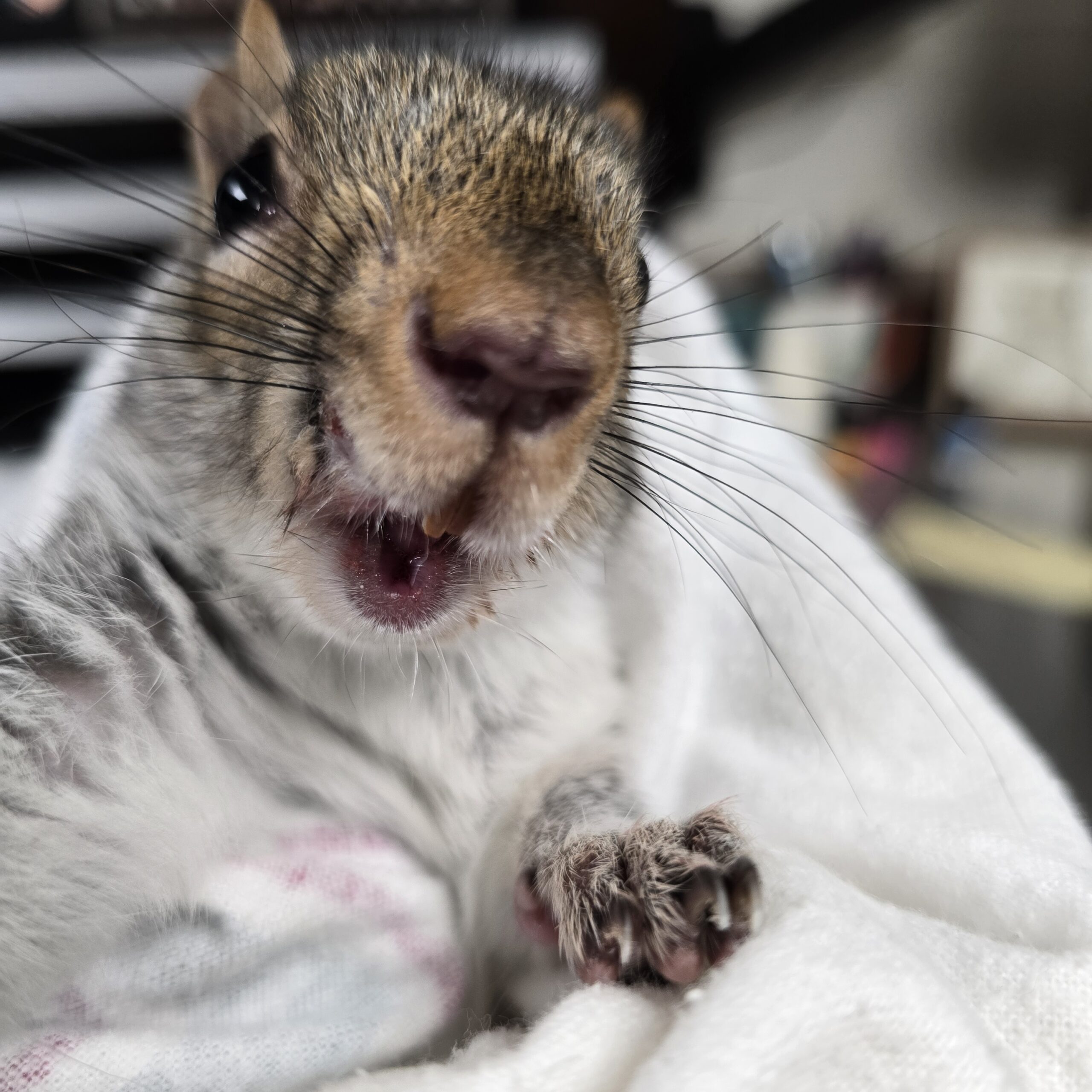
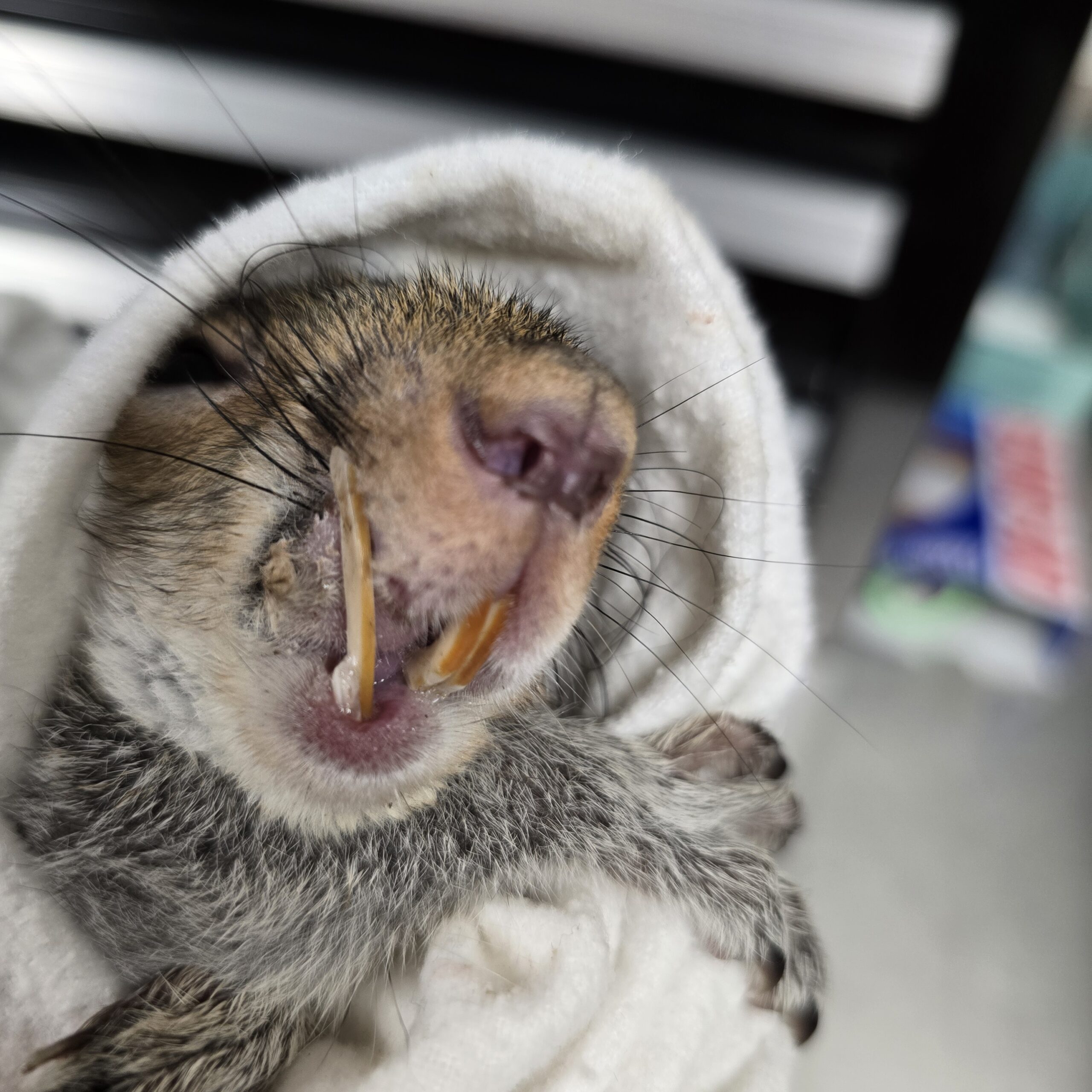
    Meet Toothy, a squirrel admitted to Acorn Acres Wildlife Rehabilitation with severely overgrown teeth.

    A squirrel’s incisors grow continuously throughout its life. Normally, proper alignment and natural chewing keep them worn to a healthy length. When that process fails, the teeth can become dangerously overgrown, interfere with eating, injure the mouth, and create a life-threatening medical emergency.

    Cases like Toothy’s require far more than kindness. They require trained hands, specialized knowledge, medical supplies, diagnostic equipment, appropriate facilities, and the resources to provide individualized care.

    Wildlife rehabilitation is often viewed as a niche animal-welfare service. In reality, it is part of a community’s infrastructure supporting animal welfare, environmental stewardship, public education, emergency response, and the people who need somewhere qualified to turn when wildlife is in distress.

    In 2025, Acorn Acres admitted more than 630 wild patients and achieved an 84.21% rehabilitation success rate.

    We have already admitted 600 patients in 2026 and the year is not over.These numbers represent more than growth. They demonstrate both the increasing demand for qualified wildlife care and our ability to give injured and orphaned animals a meaningful second chance.

    We provide professional care for Pennsylvania’s prey animals, ranging from mice to beavers, with specialized expertise in squirrels, cottontail rabbits, groundhogs, and Virginia opossums.

    We do all of this as a 100% volunteer-run nonprofit, without payroll or tax funding.

    Local businesses can help sustain this essential community resource through corporate sponsorships, matching-gift programs, employee volunteer projects, donated professional services, and in-kind support.

    When your company considers community investment, does wildlife and environmental stewardship have a place in that conversation?

    We believe it should.
  • Farewell Finnigan

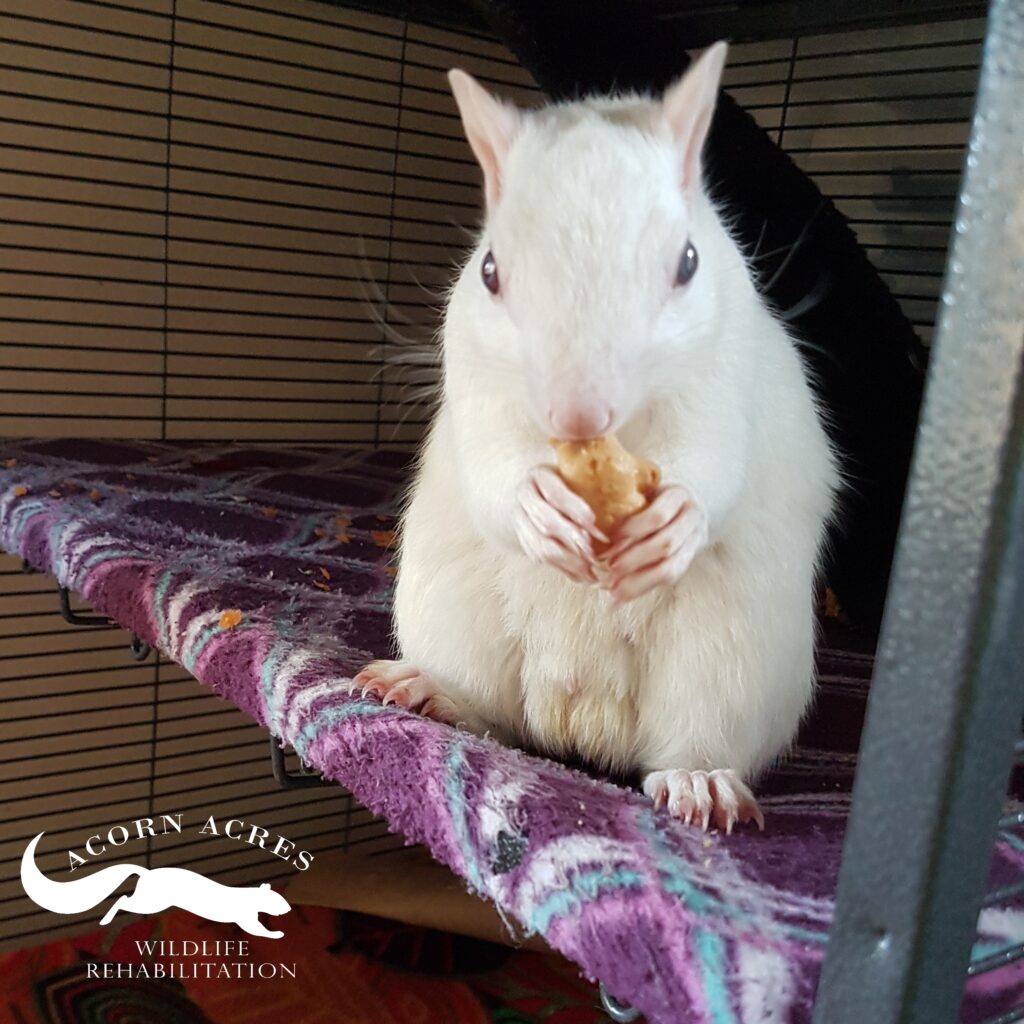
    Some animals change your heart forever. Encountering an Albino Eastern Gray Squirrel is one of those unforgettable moments.

    Finnigan was one of them. 🤍🐿️

    After more than 10 years by our founder’s side, our beloved albino Eastern Gray Squirrel has earned his wings.

    Long before Acorn Acres Wildlife Rehabilitation existed, our founder volunteered with another wildlife rehabilitation facility. As a young squirrel, Finnigan was determined by others to be non-releasable simply because he was albino. Trusting the guidance she was given at the time, she welcomed him into her care and spent the next decade giving him the happiest life she possibly could.

    And he was happy. He became a wonderfully spoiled, “bougie” old squirrel who loved his routines, his favorite foods, and all the comforts that came with growing old in human care.

    But as the years passed, Finnigan taught us something we will never forget.

    He should have had the chance to be wild.

    By the time our founder had her own permits and Acorn Acres was born, Finnigan had spent virtually his entire life in captivity. Releasing him at that point would not have been fair to him. So instead, we promised him that his life would have purpose.

    Because of Finnigan, our standards changed.

    Today, albinism alone is never considered a reason to keep a wild animal in captivity. Every patient is evaluated as an individual. If they have the physical and behavioral ability to survive in the wild, they deserve that opportunity…regardless of what color their fur may be.

    We can’t rewrite Finnigan’s story.

    But because of him, we can help write a different one for every albino animal that follows.That is his legacy.

    Run through the treetops, sweet Finnigan. Chase the leaves, feel the sunshine, and finally experience the freedom you should have known all along.

    You were deeply loved. You will never be forgotten. 🤍

    Finnigan the albino Eastern Grey Squirrel
  • Willow

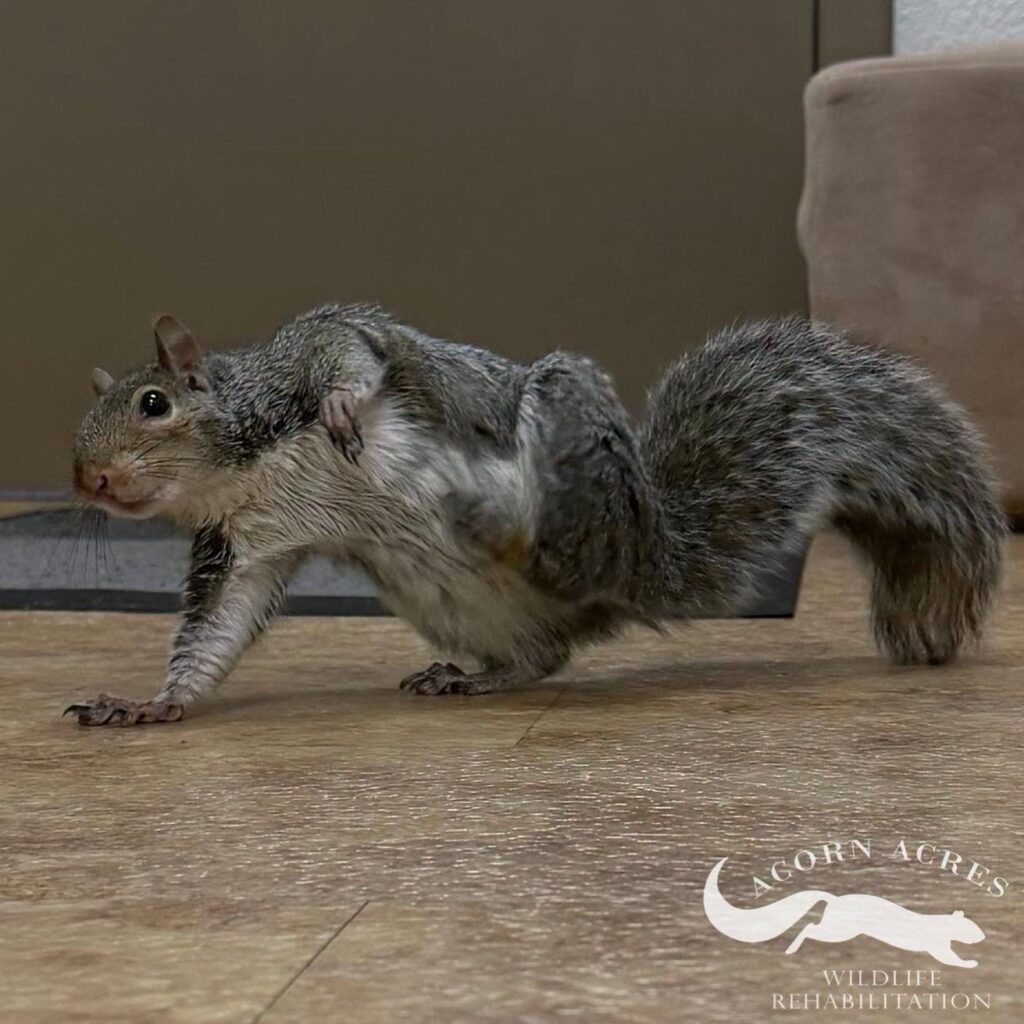
    You’d never know Willow is nearly blind if you watched her for five minutes. 💚

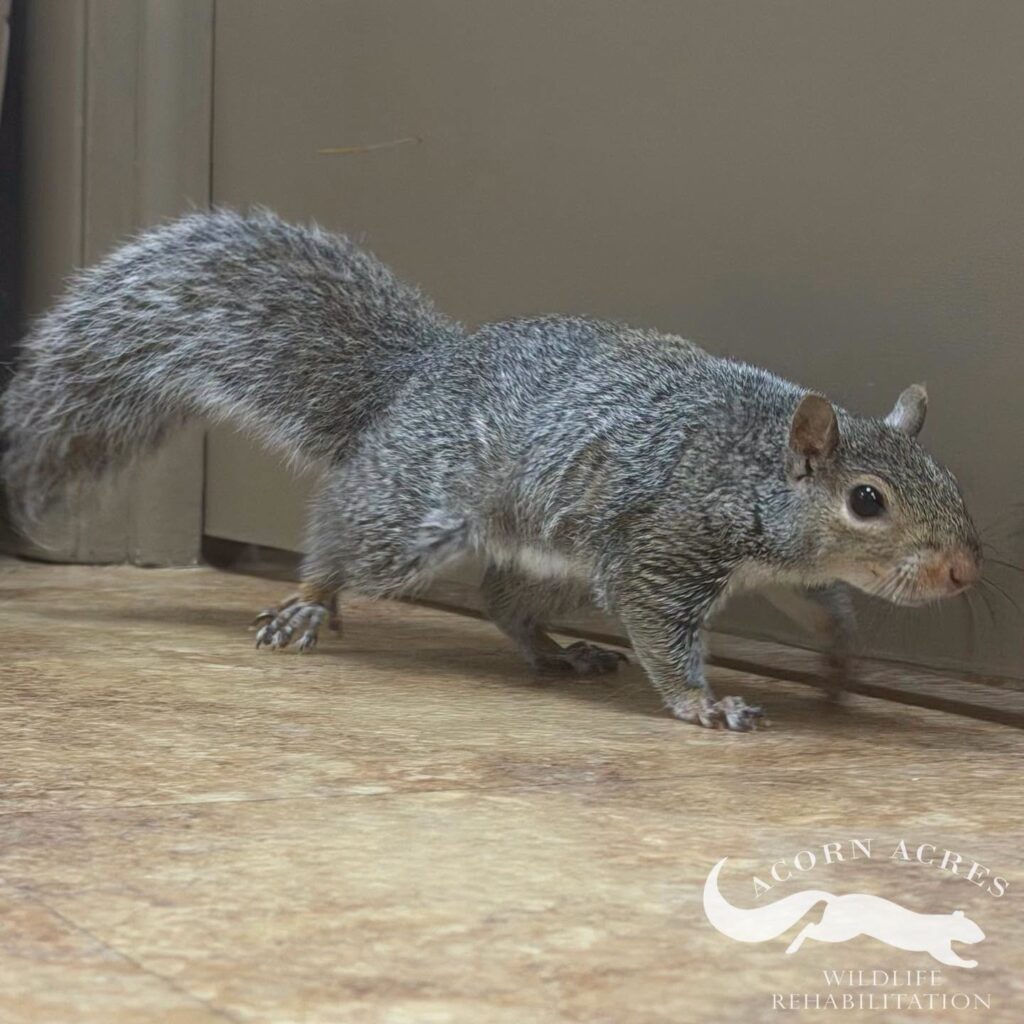
    Willow got some supervised free-range time in the clinic today while we cleaned her enclosure. As many of you know, Willow is nearly blind, so she navigates the world a little differently than our other resident squirrels. She moves more cautiously, takes her time exploring new spaces, and relies on her other senses to figure things out.

    But don’t let that fool you.

    The second we need to catch her, she suddenly remembers she’s a squirrel. 🐿️💨

    Watching Willow confidently explore despite her limitations is one of our favorite reminders that wildlife is incredibly adaptable. She may not see the world the way other squirrels do, but she doesn’t let that stop her from enjoying it.

  • 26-250 Manheim

    Patient 26-250 was found by Wendy in the middle of the night lying in a turning lane on Manheim Pike. He appeared to have been struck by a vehicle and wasn’t going anywhere.

    With no wildlife rehabilitators open and nowhere to take him at that hour, Wendy did something we wish more people knew to do. She carefully contained him in a plastic tote, placed him in a dark, quiet room, and left him alone until morning.

    No food. No water. No handling. No guessing. Just a safe, warm, quiet place to spend the night.

    The next morning, she brought him to Acorn Acres. At intake, he was alert and surprisingly plump, but he had blood around his mouth and signs of trauma. We knew he had been hit by a car so we began monitoring him closely while providing supportive care.

    As part of our diagnostic workup, we also ran a LeadCare test. His blood lead level came back at “high” which is more than 65 ug/dL, a level high enough to require immediate treatment.

    Lead poisoning in wildlife is incredibly common and can cause weakness, neurological problems, inability to find food, digestive issues, abnormal behavior, and make animals much more likely to end up in dangerous situations like roadways.

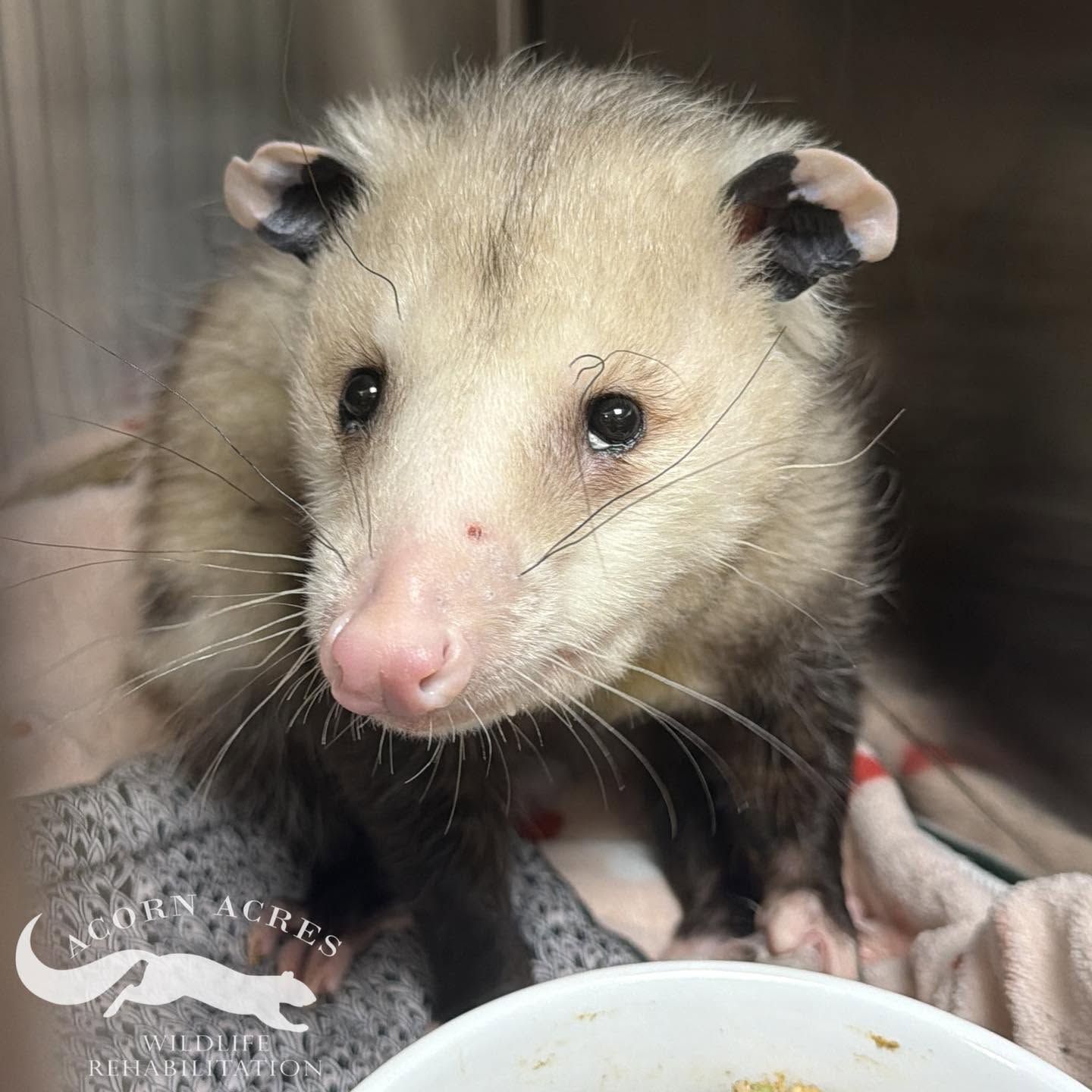
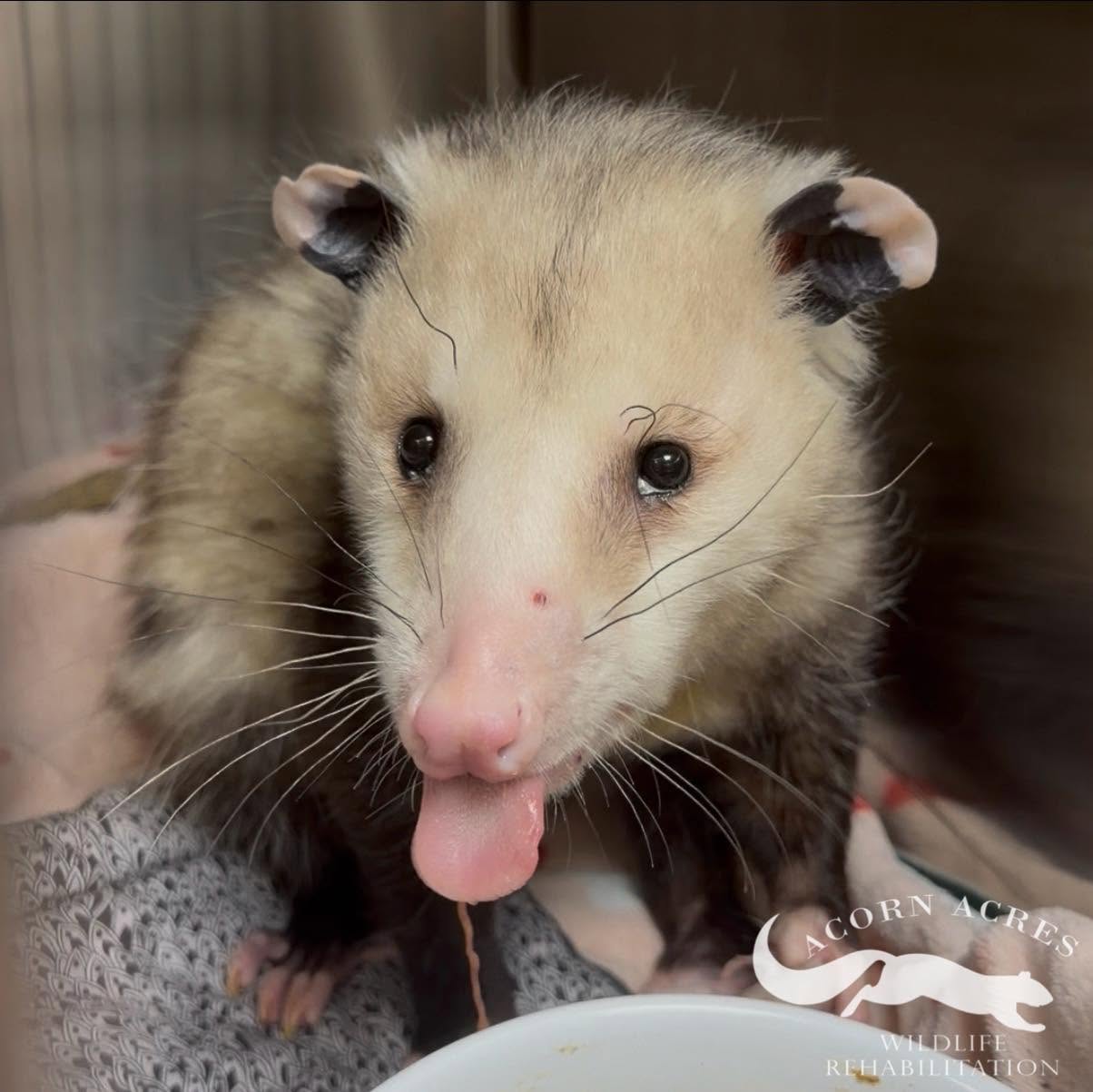
    Over the past two weeks, this handsome guy has undergone lead chelation therapy, and received multiple rounds of medications/fluids along with proper rest. And now? Well… judging by these photos, he’s feeling a whole lot better. 😅

    He’s eating well, acting like an opossum again, and reminding us that sometimes what looks like a simple car strike isn’t always the whole story.

    A huge thank you to Wendy for doing everything right. Because she stopped, cared enough to help, and gave him a safe place to spend the night, this opossum had the opportunity to receive the treatment he needed.

    💚 Wildlife Tip: If you find an injured wild animal after hours, the best thing you can usually do is place it in a secure container in a warm, dark, quiet location and contact a licensed wildlife rehabilitator as soon as possible. Keeping them calm can be lifesaving.

  • 26-318 Eleanor

    The eye likely cannot be saved. 💔

    Patient 26-318, now known as Eleanor, was found by Raymond after he noticed something was terribly wrong and made the decision to stop and help.

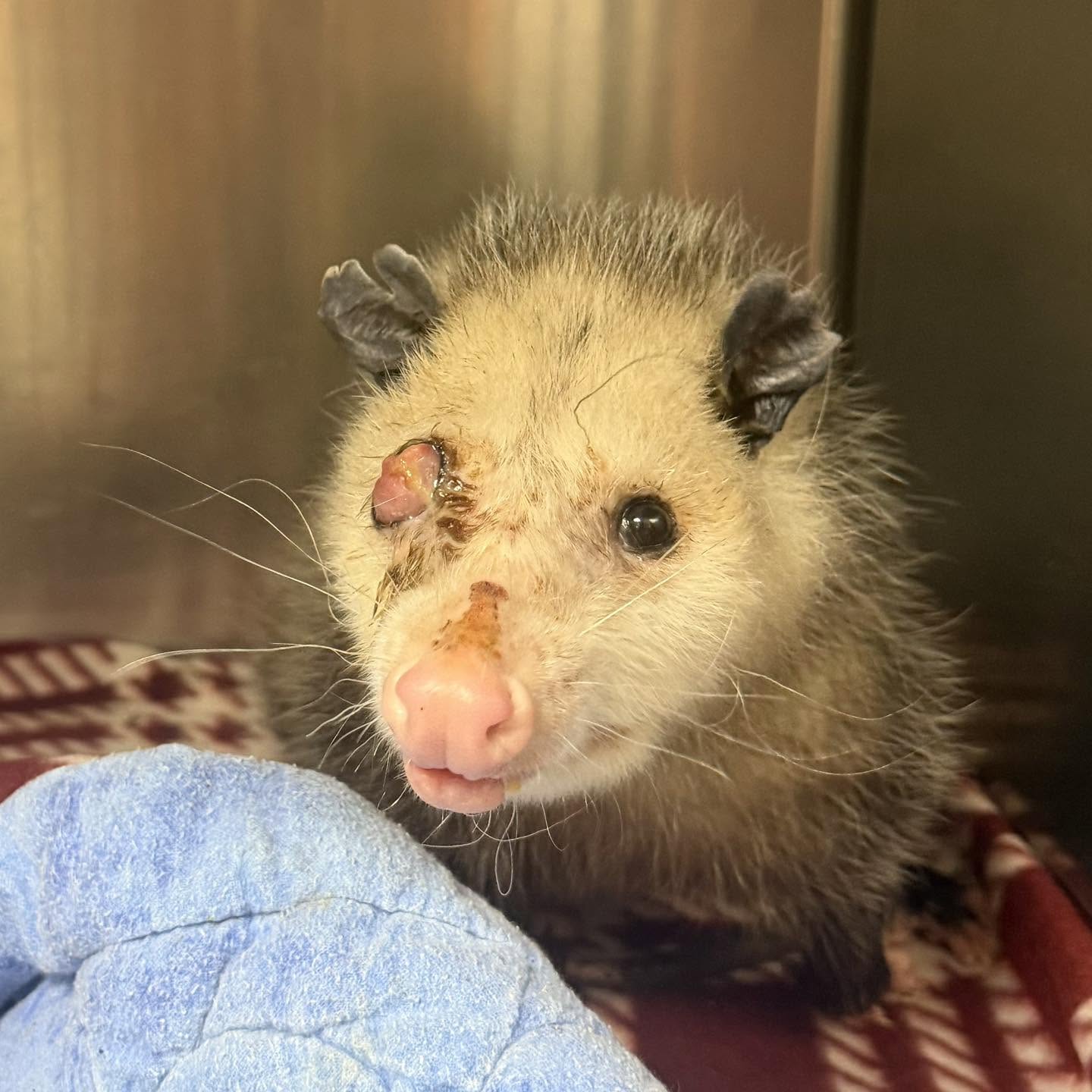
    When Eleanor arrived at Acorn Acres, she was suffering from a severe injury to her right eye. The eye was protruding from the socket, badly damaged, and no longer functional. She was also mildly dehydrated and in obvious need of medical attention.

    What happened to Eleanor is something we’ll likely never know.

    Wild animals don’t come with a medical history. We don’t know whether this injury was caused by a predator encounter, a vehicle strike, an infection, trauma from the environment, or something else entirely. By the time many wildlife patients reach us, all we can see is the outcome.

    Since arriving, Eleanor has received fluids, parasite treatment, and pain management while we work with our veterinary team to determine the best course of action. Unfortunately, the damage to the eye is likely too extensive to repair and will have to be removed.

    While that may sound heartbreaking, there is good news.

    Wildlife can be incredibly resilient, and Virginia opossums adapt remarkably well to the loss of one eye. If her remaining eye is healthy and she recovers well from surgery, Eleanor can still navigate her environment, find food, avoid predators, and live a normal wild life.

    It’s easy to look at these photos and see what Eleanor has lost but we see something else.

    We see an animal that is still alert. Still eating. Still curious. Still fighting.

    And we see a finder who cared enough to stop, make a phone call, and give her a chance. Sometimes that’s all it takes to change the outcome of a life.

    Thank you, Raymond, for making that choice. 🩷