Patient 26-250 was found by Wendy in the middle of the night lying in a turning lane on Manheim Pike. He appeared to have been struck by a vehicle and wasn’t going anywhere.
With no wildlife rehabilitators open and nowhere to take him at that hour, Wendy did something we wish more people knew to do. She carefully contained him in a plastic tote, placed him in a dark, quiet room, and left him alone until morning.
No food. No water. No handling. No guessing. Just a safe, warm, quiet place to spend the night.
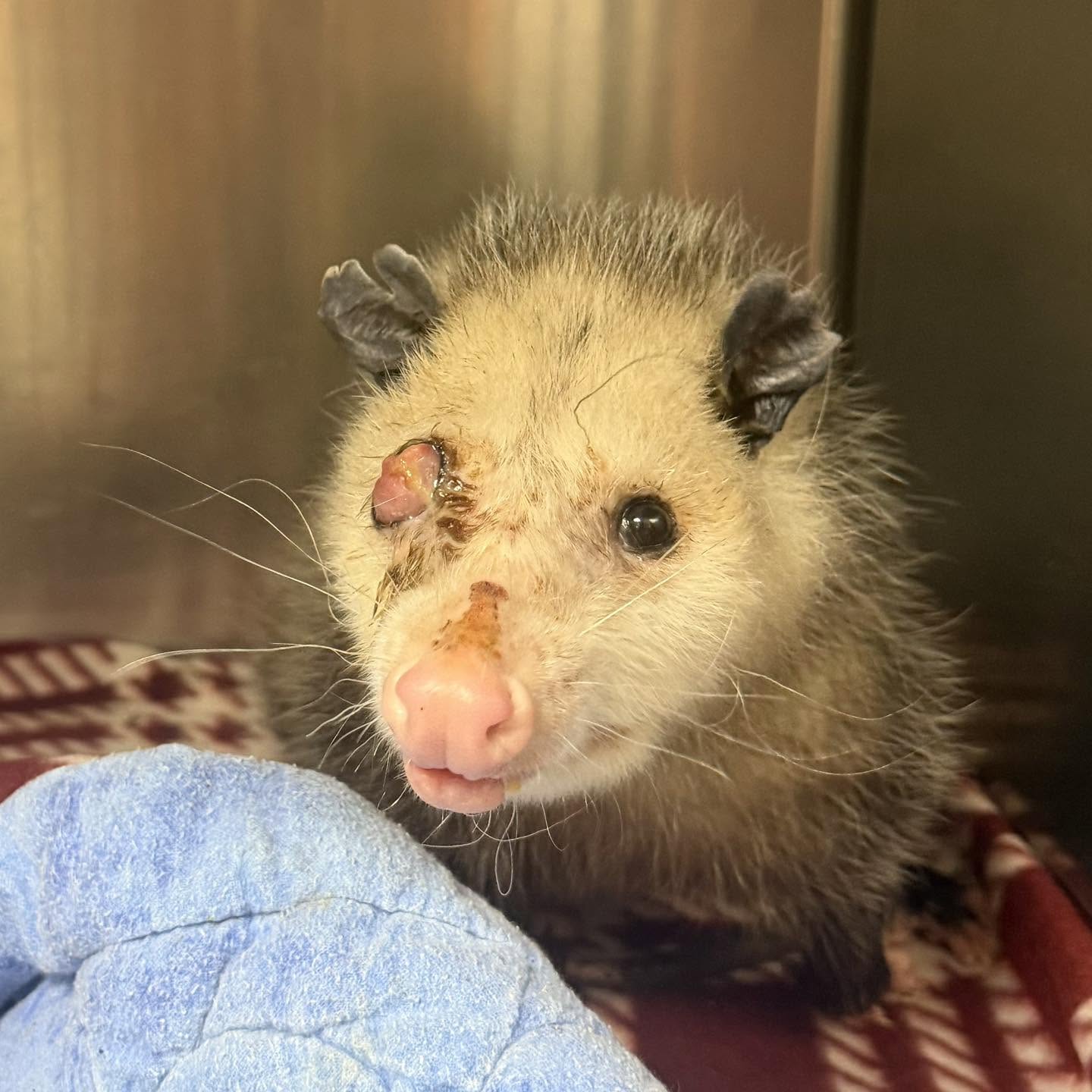
The next morning, she brought him to Acorn Acres. At intake, he was alert and surprisingly plump, but he had blood around his mouth and signs of trauma. We knew he had been hit by a car so we began monitoring him closely while providing supportive care.
As part of our diagnostic workup, we also ran a LeadCare test. His blood lead level came back at “high” which is more than 65 ug/dL, a level high enough to require immediate treatment.
Lead poisoning in wildlife is incredibly common and can cause weakness, neurological problems, inability to find food, digestive issues, abnormal behavior, and make animals much more likely to end up in dangerous situations like roadways.
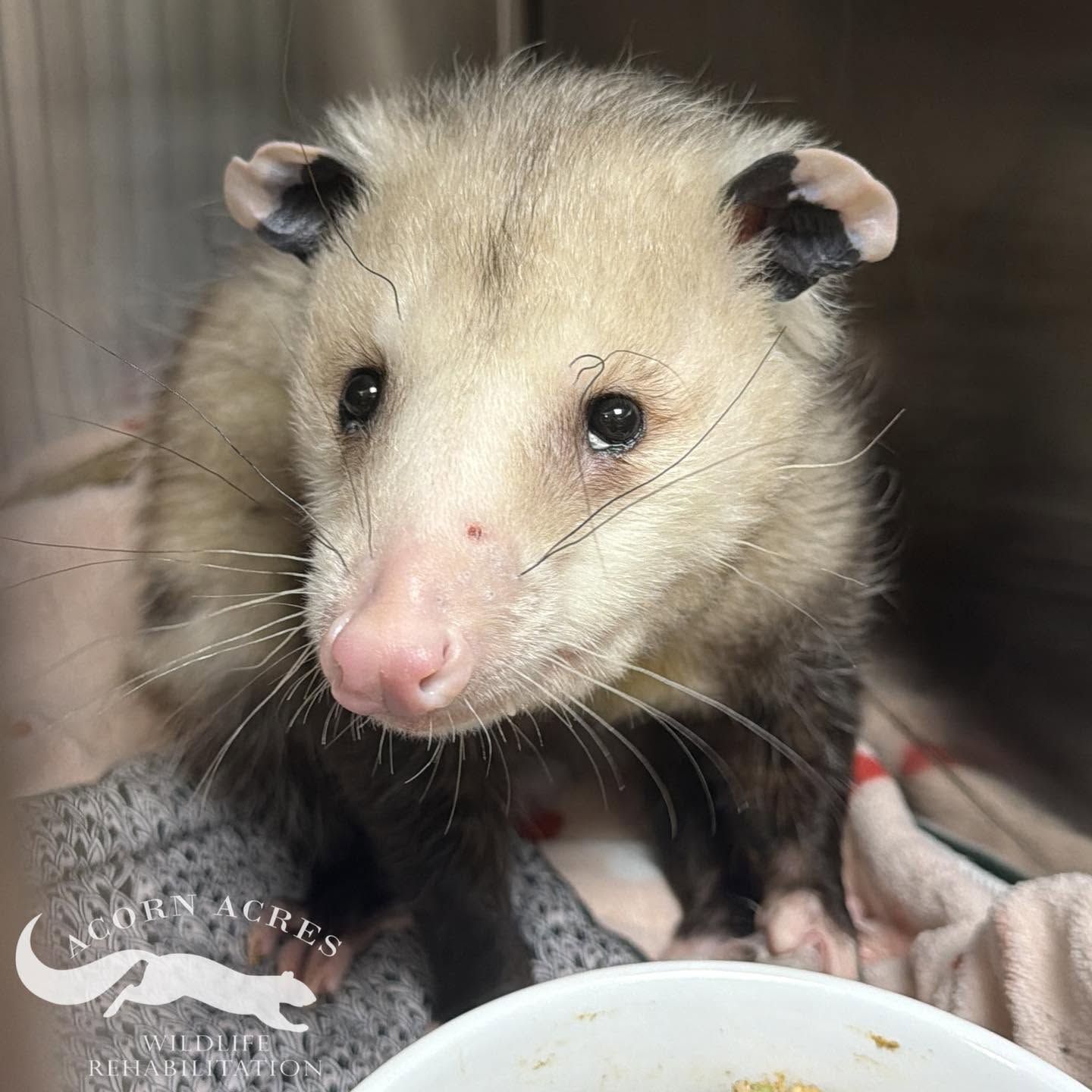
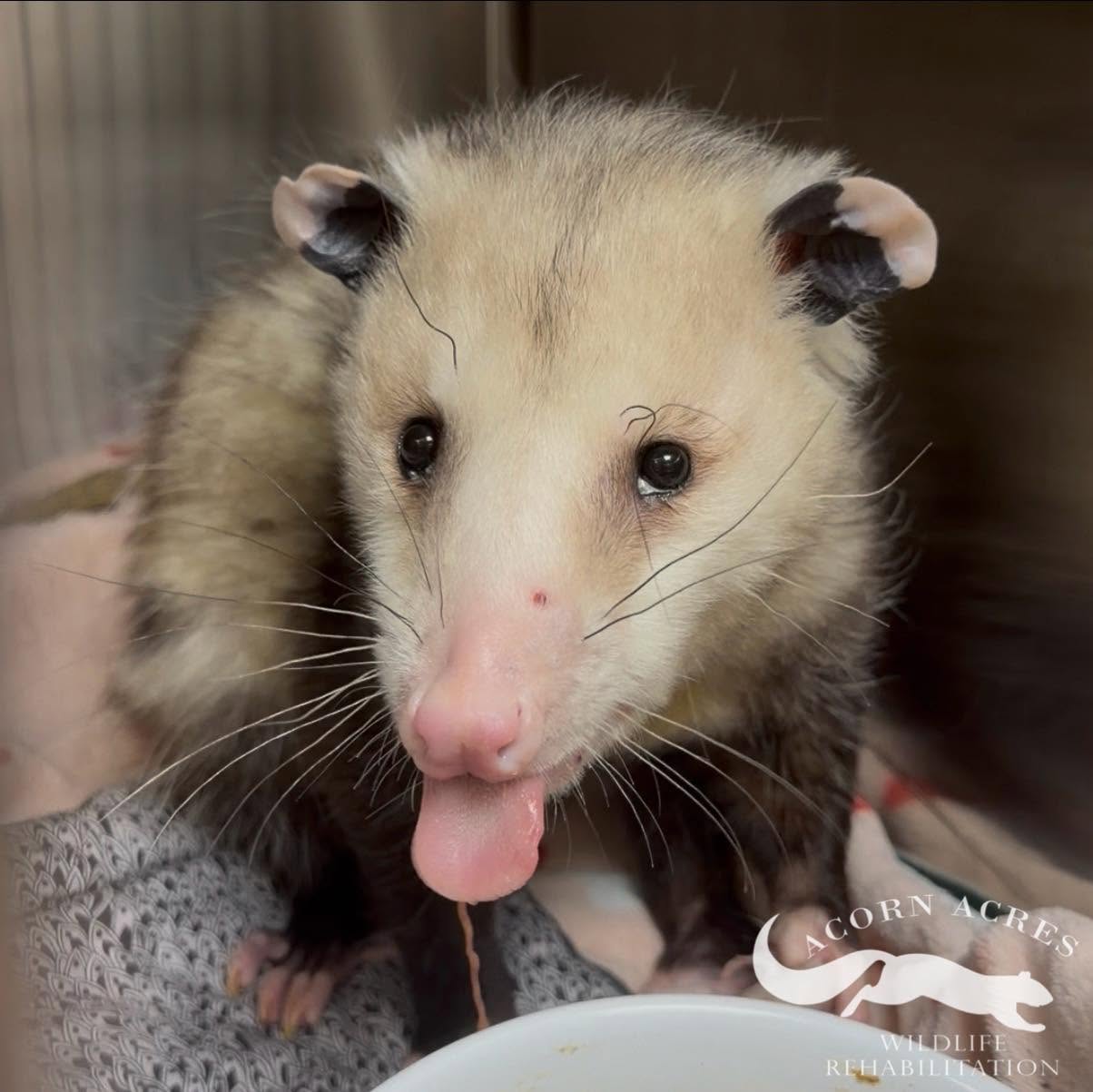
Over the past two weeks, this handsome guy has undergone lead chelation therapy, and received multiple rounds of medications/fluids along with proper rest. And now? Well… judging by these photos, he’s feeling a whole lot better. 
He’s eating well, acting like an opossum again, and reminding us that sometimes what looks like a simple car strike isn’t always the whole story.
A huge thank you to Wendy for doing everything right. Because she stopped, cared enough to help, and gave him a safe place to spend the night, this opossum had the opportunity to receive the treatment he needed.
 Wildlife Tip: If you find an injured wild animal after hours, the best thing you can usually do is place it in a secure container in a warm, dark, quiet location and contact a licensed wildlife rehabilitator as soon as possible. Keeping them calm can be lifesaving.